UV-C Sanitizers: What They Can and Cannot Do
Understanding compact UV-C sanitizers, their everyday uses, and their limitations.
By Tezeritech Team
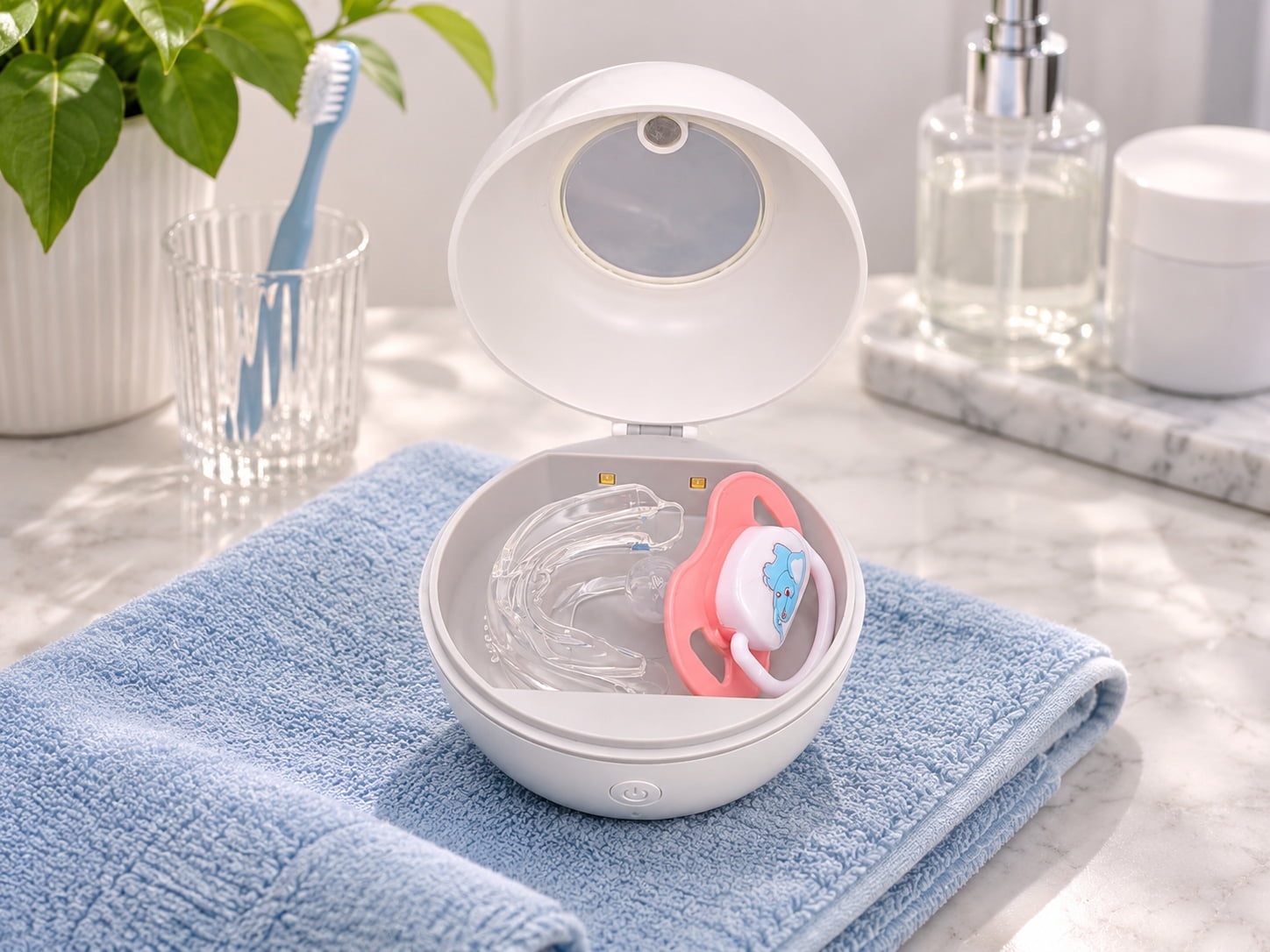
Small UV sanitizer boxes are designed to fit into everyday routines. You might find one on a bathroom counter, a bedside table, or a dressing table, used for compatible personal items such as dental accessories and toothbrush heads. They're compact and convenient, but there's an important question worth asking: what can UV-C light actually do, and what are its limitations?
Understanding how these devices work can help consumers use them appropriately and give brands and distributors a clearer picture of what to look for.
How Do Compact UV-C Sanitizers Work?
UV-C is a type of ultraviolet radiation that can inactivate certain microorganisms when a sufficient dose reaches them. It works by damaging their genetic material, interfering with their ability to reproduce or remain infectious.
In compact UV sanitizer boxes, UV-C light is directed toward items placed inside an enclosed compartment. The effectiveness of this process depends on several factors, including the light source, exposure time, delivered UV dose, surface coverage, and the microorganisms involved. Guidance from the International Ultraviolet Association (IUVA) also highlights the importance of UV dose and exposure conditions in effective UV disinfection.
Two devices with similar appearances may deliver different results. Simply having a UV-C light inside a product does not guarantee a particular level of disinfection. For this reason, specific microbial reduction claims should be supported by relevant testing of the actual product.
What Can Small UV-C Sanitizers Be Used For?
Compact UV sanitizer boxes are designed for selected personal items that fit within their compartments and meet the manufacturer's usage requirements. Depending on the model, suitable items may include:
- Dental retainers and compatible oral care accessories
- Toothbrush heads
- Small personal care tools
- Selected everyday accessories
The main appeal is convenience. UV-C treatment does not require applying a liquid disinfectant during the operating cycle. However, UV treatment should be considered an additional step rather than a replacement for ordinary cleaning.
For example, a dental retainer may still require regular cleaning according to its manufacturer's instructions. Item compatibility also matters. Certain plastics, coatings, and other materials may be affected by repeated UV exposure.
Always check the product instructions before placing an item inside a UV sanitizer.
What Are the Limitations of UV-C Sanitizers?
Although UV-C technology has useful applications, it has several important limitations.
UV-C does not remove dirt. Dust, oils, toothpaste residue, and other visible contamination still need to be removed through appropriate cleaning. These materials may also reduce UV effectiveness.
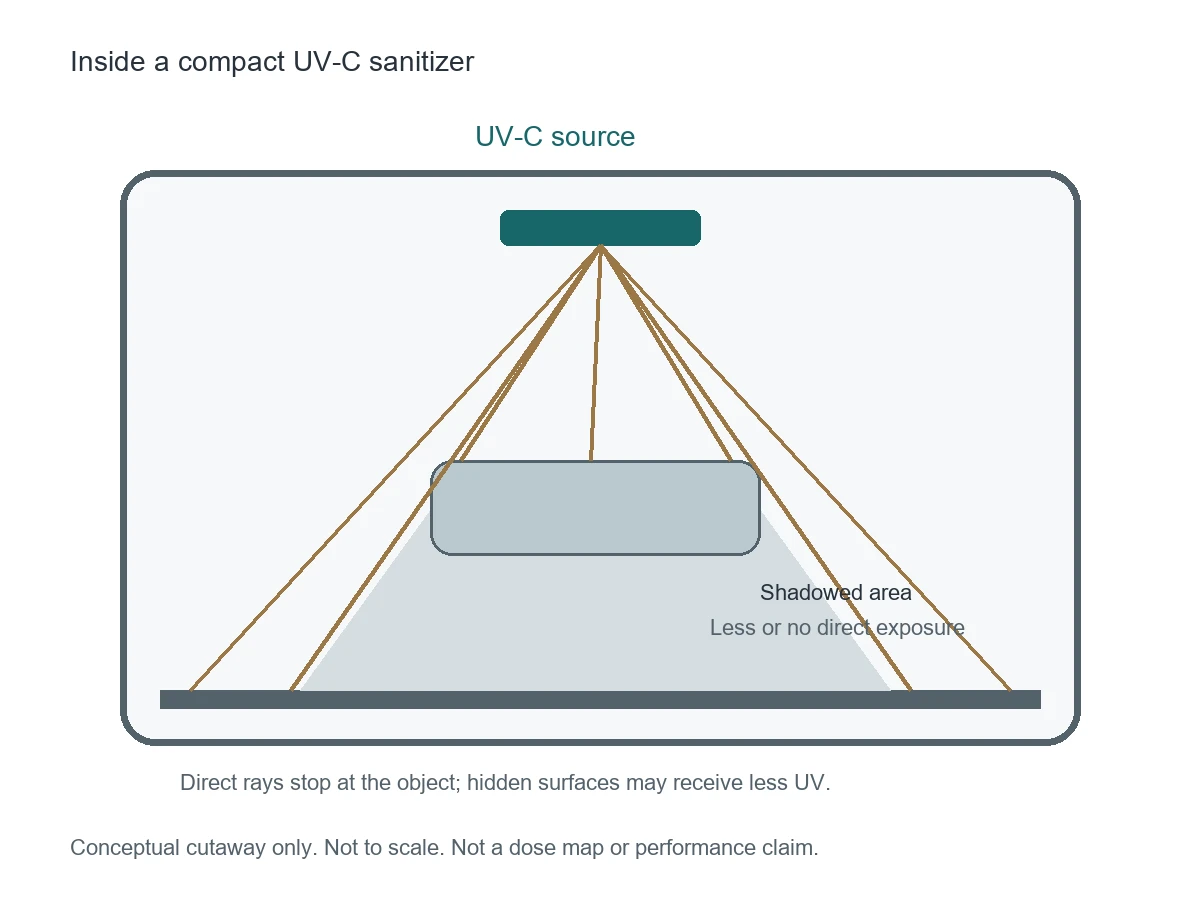
UV-C cannot reliably reach every surface. UV-C is primarily a line-of-sight technology. Grooves, overlapping parts, and shaded areas may receive less exposure.
Reflective interiors or multiple light sources may improve coverage in certain designs, but their effectiveness should be verified.
UV-C does not provide permanent protection. Even after effective treatment, items can become contaminated again through handling or everyday use.
UV sanitizing should not automatically be described as sterilization. Any microbial reduction claims must reflect the available test evidence.
What Should Buyers Look For?
For brands, importers, and distributors, choosing a compact UV sanitizer involves more than comparing prices or product photos. Several details are worth checking:
- Size and portability: Does the product fit the intended setting and items?
- UV-C performance: Are relevant test reports available for the specific model?
- Safety features: How does the device help prevent unintended UV exposure?
- Item compatibility: Which materials and personal items are suitable?
- Customization: Are neutral packaging, private label, or other branding options available?
Direct UV-C exposure can harm the eyes and skin. The U.S. Food and Drug Administration (FDA) warns that certain UV-C radiation sources can cause eye and skin injuries. Protective design, appropriate testing, and clear instructions are therefore essential. Buyers should also review applicable product safety and regulatory requirements for their destination markets.
A well-documented product with realistic performance claims is a better foundation for a long-term product range.
Explore Compact UV Sanitizing Solutions With Tezeritech
Tezeritech offers compact UV sanitizing and personal care product options for brands, importers, and wholesale buyers. Our collection includes UV sanitizer boxes and toothbrush sanitizing solutions designed for different everyday applications.
Available sourcing and customization discussions may include neutral packaging, private label, and OEM/ODM options, depending on the selected model and project requirements. If you're exploring compact UV sanitizers for your product collection, we'd be happy to help you review suitable models and available customization options.
Looking for Compact UV Sanitizers for Your Brand?
Explore our UV sanitizer collection and discuss wholesale, private label, and customization options with our team.